• Skip to primary navigation
  • Skip to main content
  • Skip to primary sidebar
  • Skip to footer

Bob Easton

Chocolate powered woodworking

  • Home
  • Grinling Gibbons Tour

Search Results for: kerfing plane

Kerfing Plane – the Fence

October 11, 2014 by Bob Easton 7 Comments

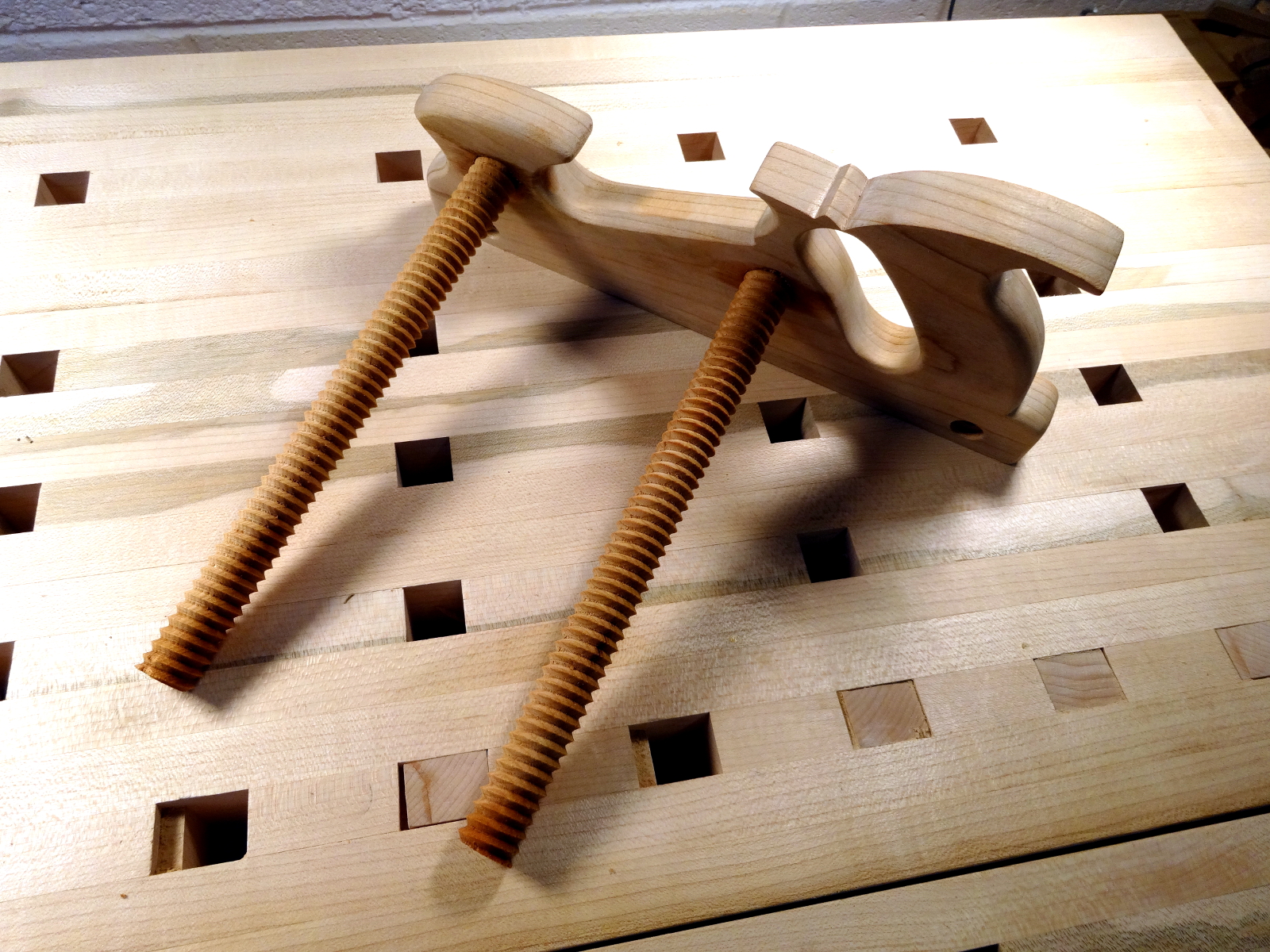
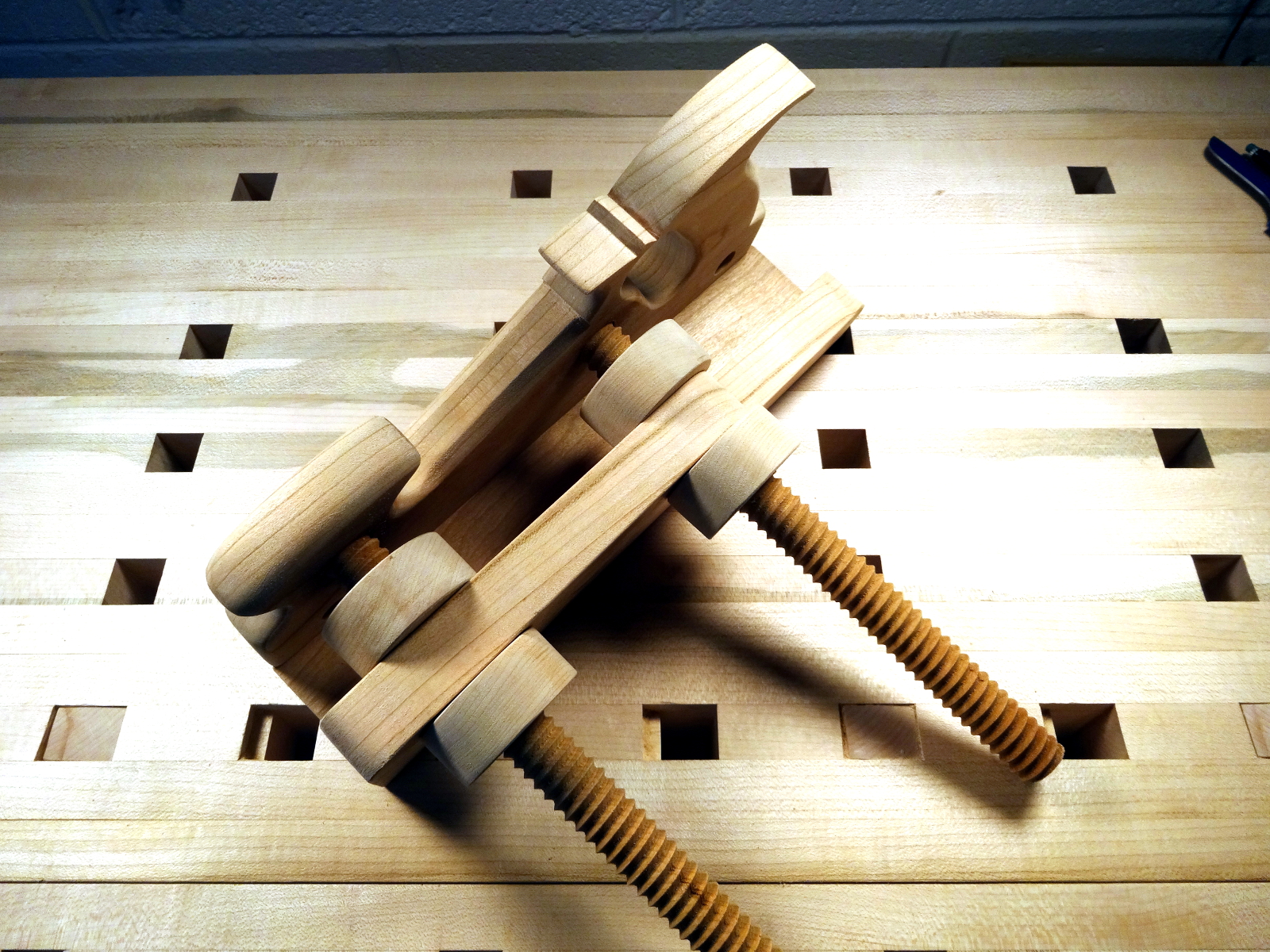
So, what are those threaded holes for? Threaded rods, of course. And the adjustable fence.
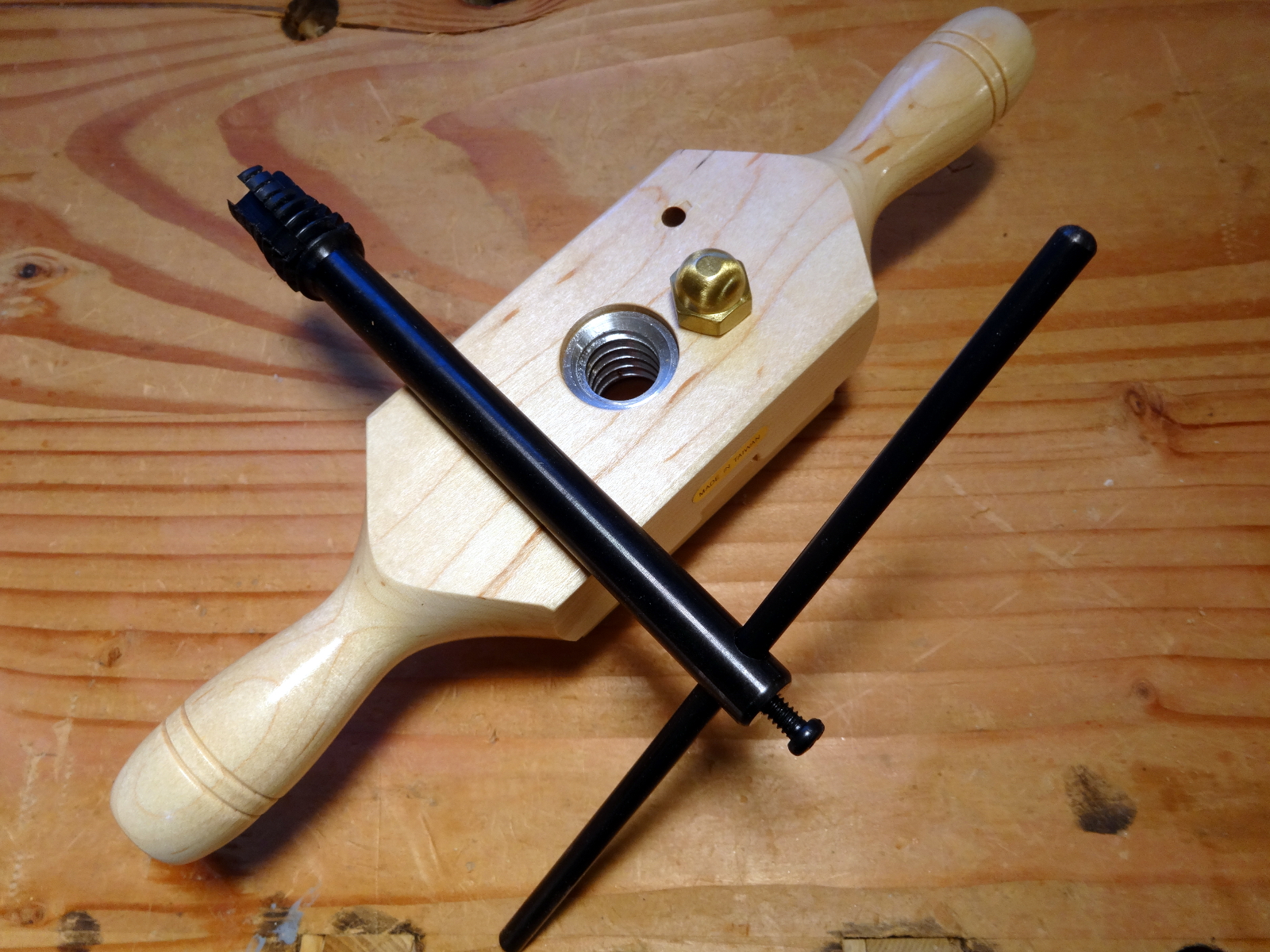
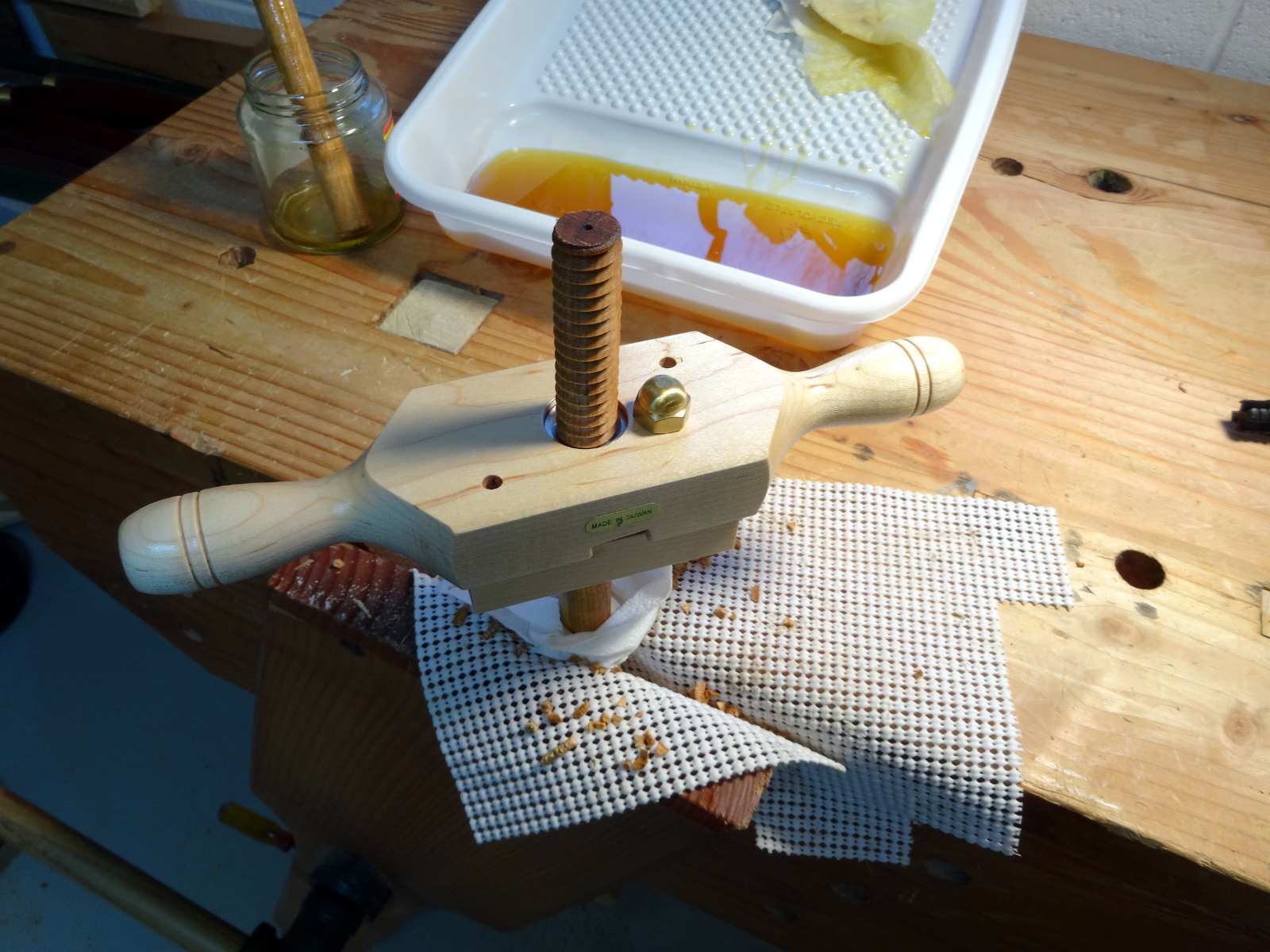
photo of wooden screw cutting tools
photo of cutting a wooden screw
photo of handle with two wooden screws
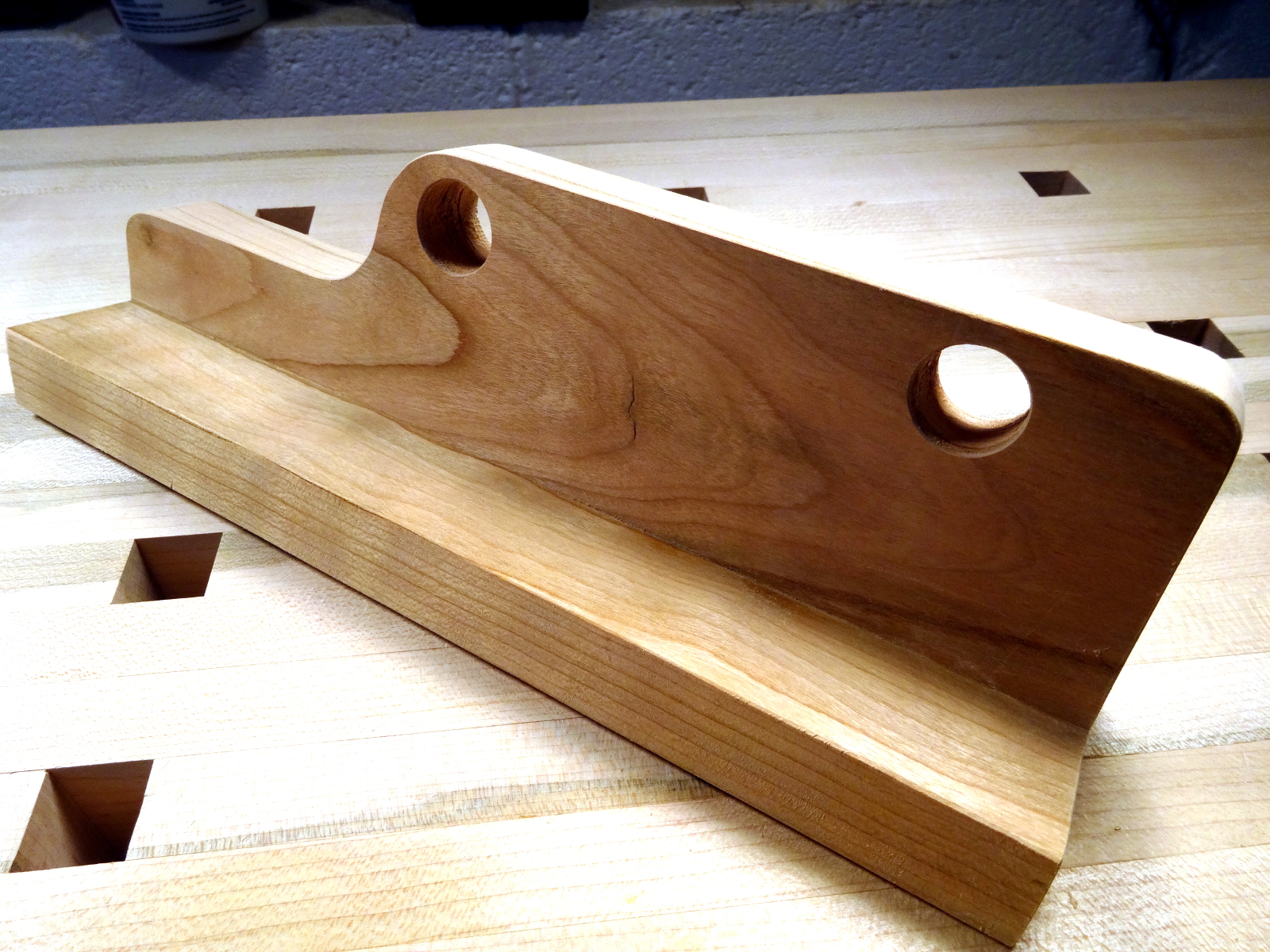
photo of the fence
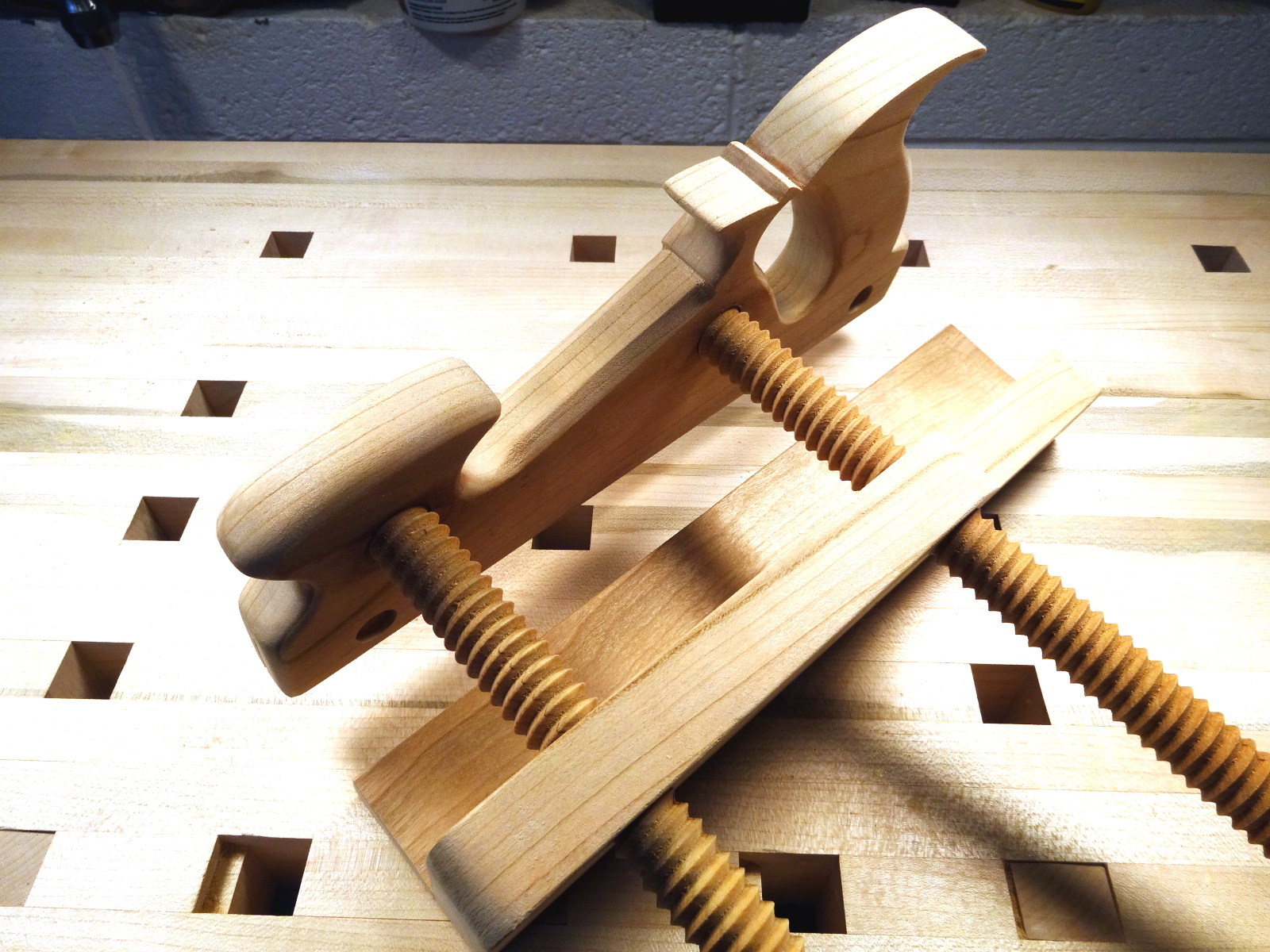
photo of roughly assembled plane
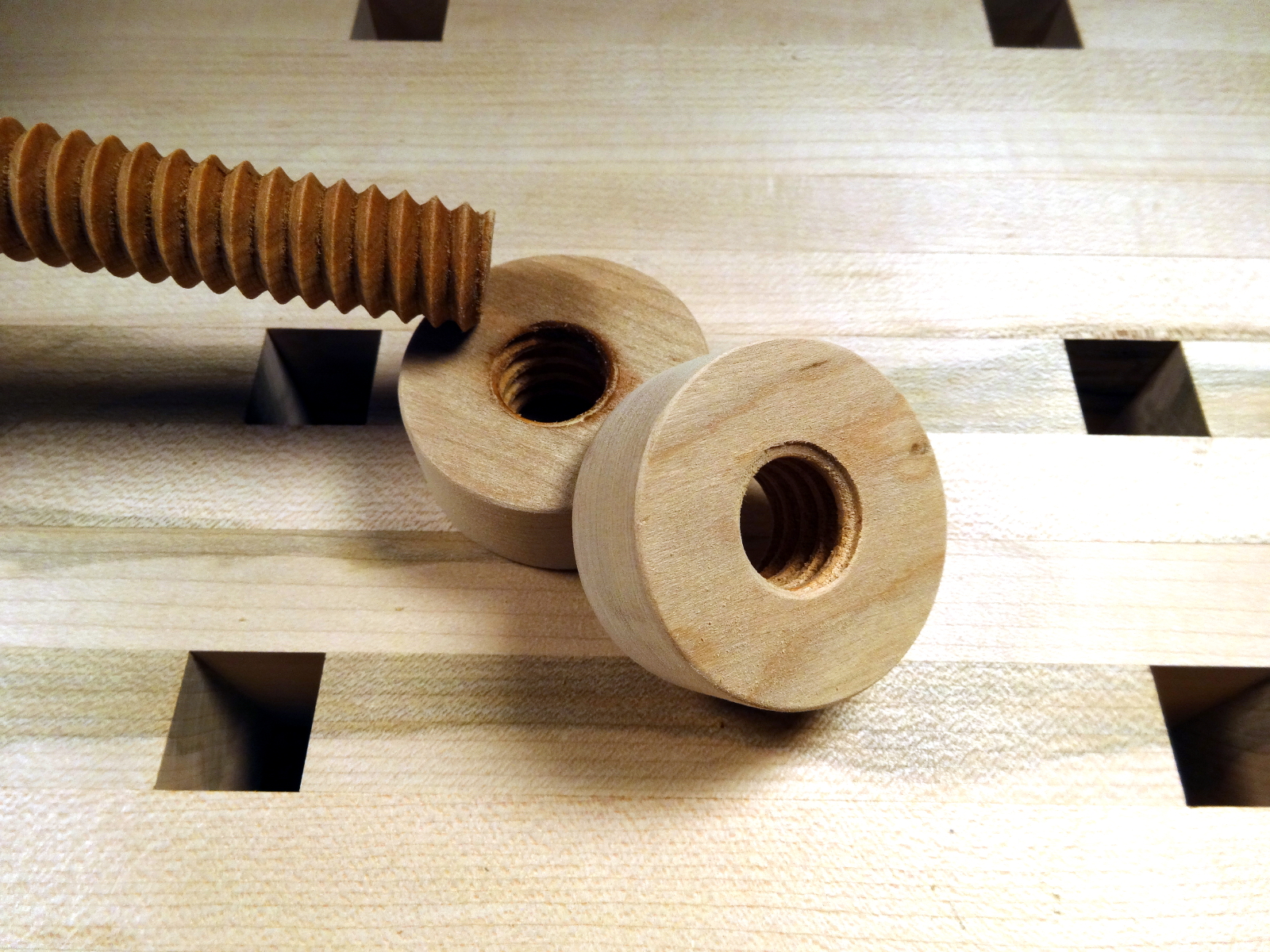
photo of wooden screw and two wooden nuts
photo of plane roughly assembled

The fence itself is pretty simple, two pieces glued together with holes drilled to allow sliding along the threaded rods. Tom Fidgen planed off the bottom piece at an angle, providing a way of resting the plane at an angle which keeps the blade off the bench. I liked the idea and did the same.

Now, the threading… I’ve read good and bad (too often more bad than good) about the quality wood threading kits. I was almost tempted to use metal parts (Hello McMaster-Carr), but decide to give the Woodcraft 3/4″ threading kit a try. It’s worked out very well! No problems, no horror stories. The cutters are plenty sharp enough for producing good results on cherry. I was careful to chamfer entry points, to lube the tap with BLO, and to soak the dowels overnight in BLO before threading.

The dowels are right on 3/4″ diameter, ripped from 4/4 stock and then turned on the treadle lathe.

The nuts too are turned. I stacked four 4/4 blocks together with double sided tape, sawed off the corners and turned on the lathe. Each was then drilled with a 5/8″ auger and tapped. Easy-peasy. I left them round, rather than putting flats on the sides, because they are easy enough to grip and don’t need much torque to do their job.

It comes together very nicely, allowing the fence to be adjusted right up against the blade. I’ll cut the threaded rods down some after I decide how far I might really want to extend the fence.
Filed Under: Hand tools, kerfing plane, resawing, Shopmade, Woodworking

Kerfing Plane

October 9, 2014 by Bob Easton 2 Comments

Resawing lumber is a part of many projects, from big long boards for the hulls of boats, to fine hardwood boards for boxes. It’s time to take resawing accuracy to the next stage. I follow the usual technique of sawing from all 4 corners and flipping frequently to stay on track, or for a very long board, still flipping frequently side to side. Even so, going astray a little bit and recovering often produces the dreaded “X” in the middle of a board. That’s sometimes a hump, with matching divot in the other piece. I’ve never had an error of that sort serious enough to ruin a project, but I would like to spend less time “cleaning up.”

No, don’t blame it on my saws. They are terrific and I keep them wicked sharp. It’s the guy pushing the saw.

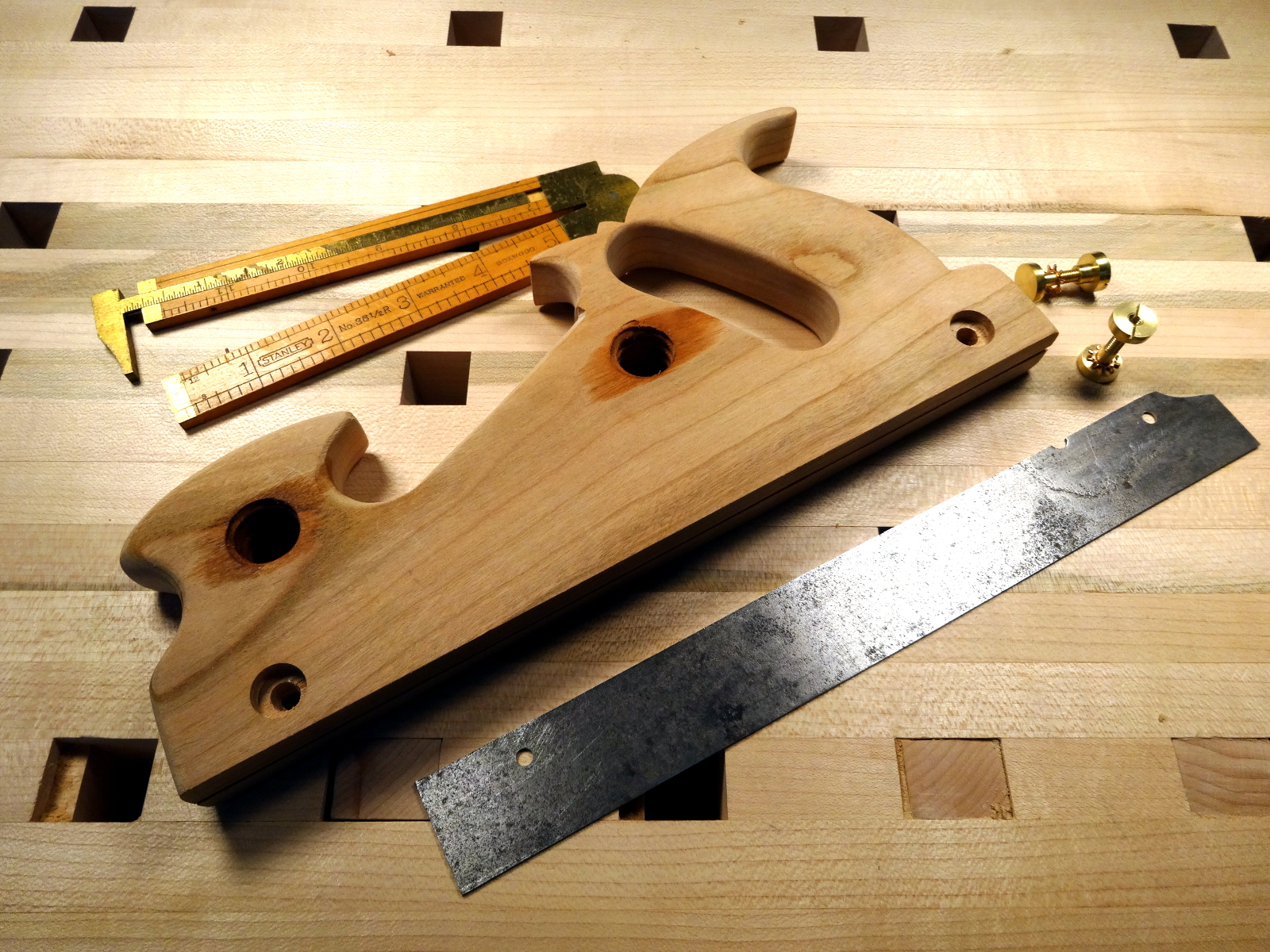
kerfing plane parts

Tom Fidgen published his solution, a “kerfing plane,” on his blog and in his recent book Unplugged Workshop. The idea is to produce a kerf of reasonable depth on all edges of a piece of lumber, and then use that kerf to guide the saw. We’ll see if it makes a difference.

Tom started with a fixed fence version and converted to an adjustable fence version. I’m going straight to the adjustable version. Here’s a start at the main body, in cherry. The “stains” near the upper holes are from linseed oil used to lubricate a tap for threaded holes (more on that later). The blade, needing teeth, is from an old Disston. The saw nuts are from Issac Smith’s Blackburn Tools.

Filed Under: Hand tools, kerfing plane, resawing, Shopmade, Woodworking

New Greenland Paddle – part 2

July 23, 2020 by Bob Easton Leave a Comment

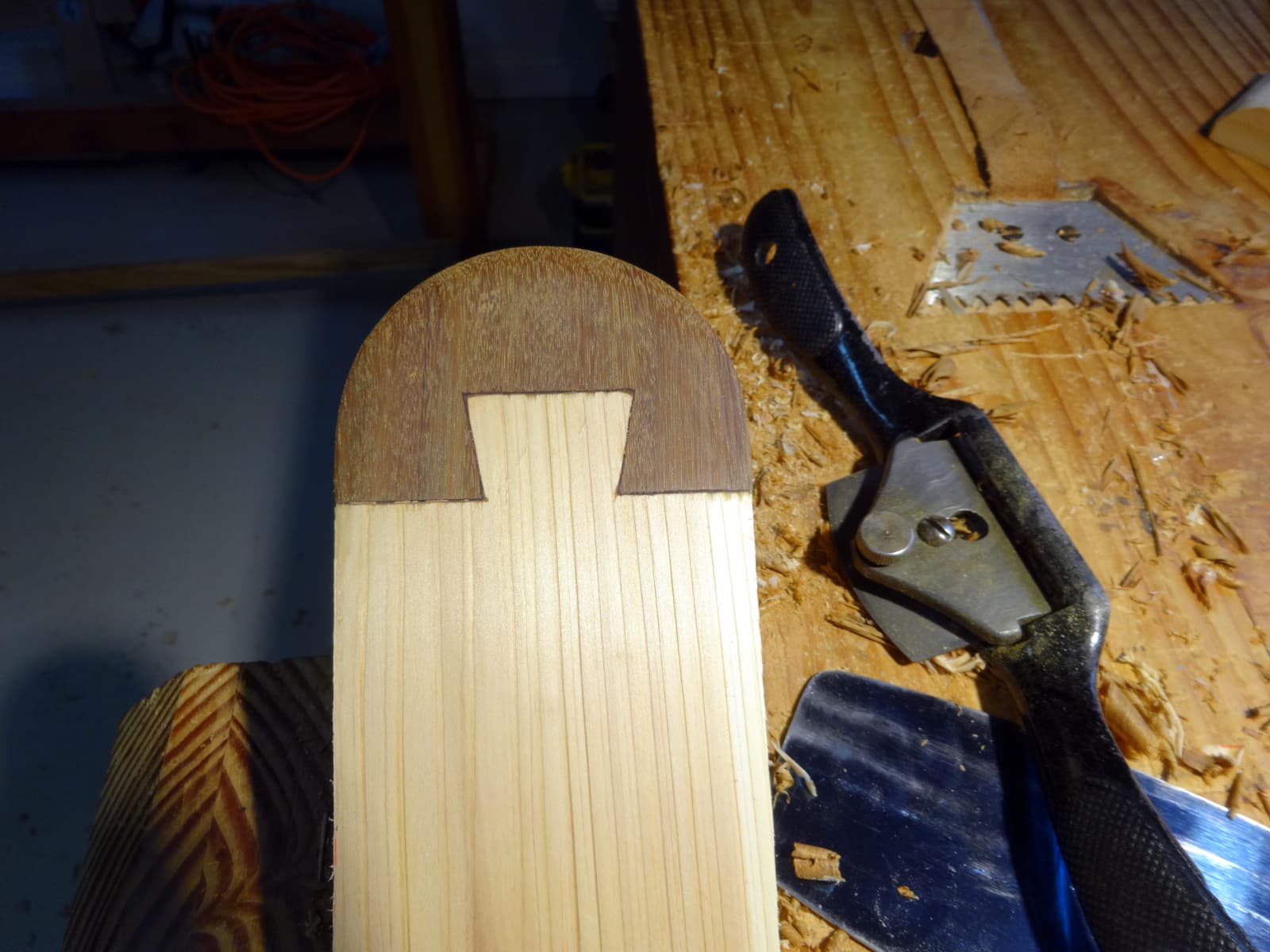
Sturdier tips. My earlier Greenland paddles have held up OK, with normal dents and dings. Yet, the tips have taken a beating. Evan suggested hardwood tips for this one. That’s what that darker lumber pictured in part 1 is for. It is one of the Mora family, several times heavier than cedar, hard and dense. My goal is to use a little bit at each tip, just enough for protection, not enough to be too heavy.

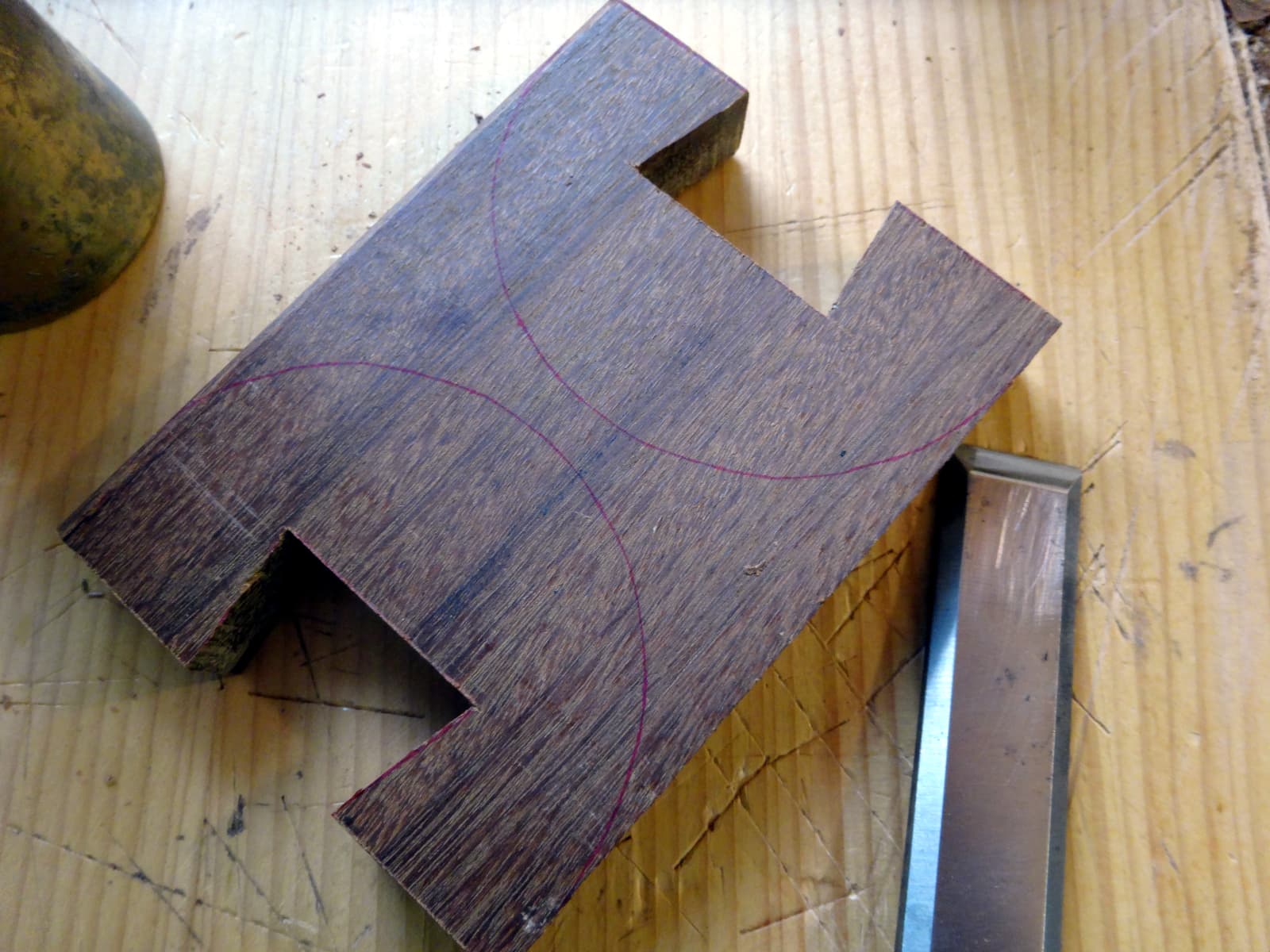
My foremost concern is how to keep the tips attached. Thin pieces don’t leave much opportunity for advanced joinery (T&G, biscuits, etc.) and end-grain to end-grain gluing is always a weak option. Let’s improve the amount of surface area for glue by using a substantial dovetail.

First, the plank thickness has to be reduced. Time for resawing. Start with the kerfing plane, finish with a rip saw. Then, layout the parts and cut the dovetails. Zowie, that wood is hard!

  • photo of kerfing a board before resawing
  • photo of resawn board and pattern for cutting the tips
  • photo of two tips with dovetails cut
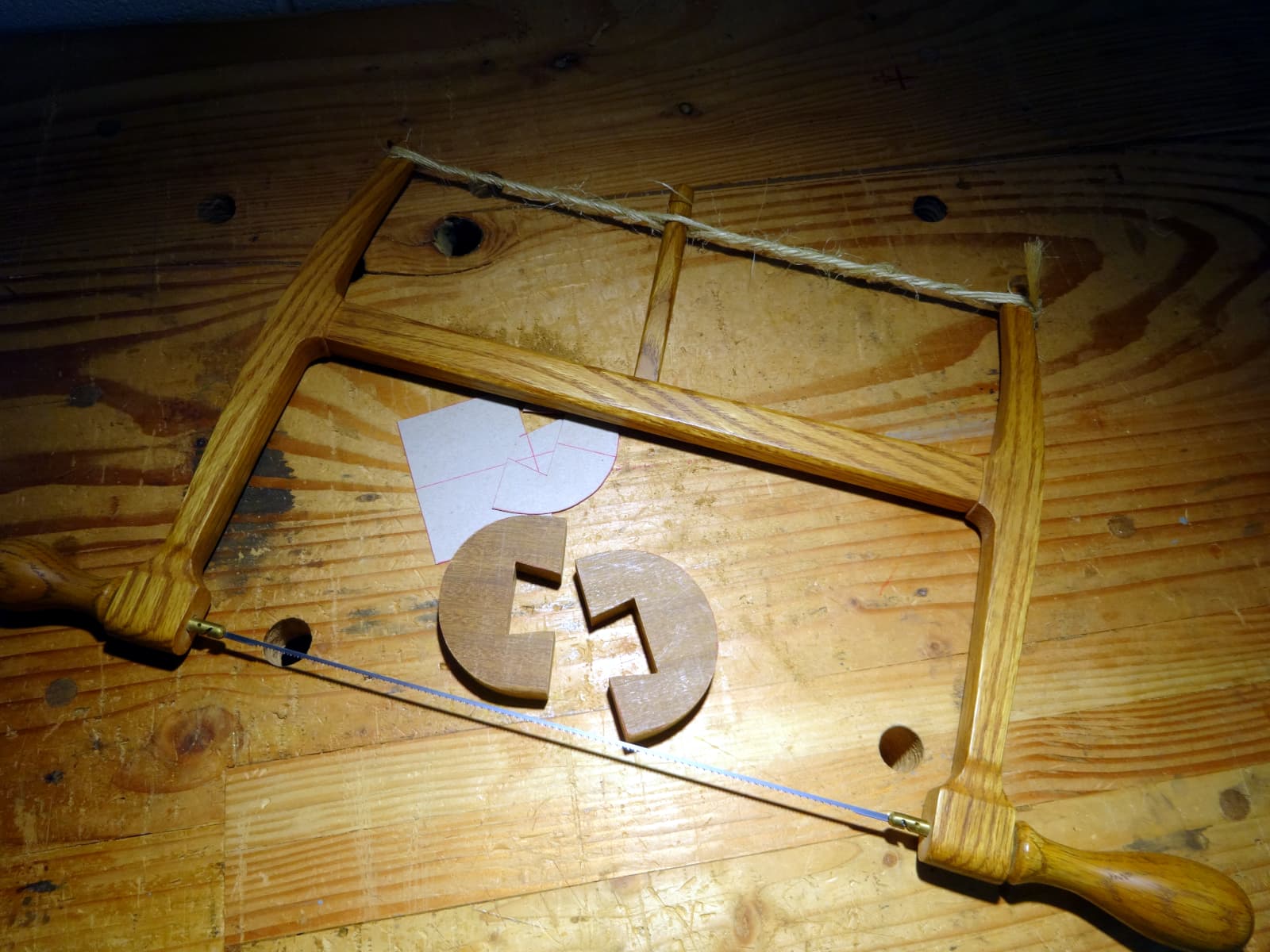
  • photo of shaped tips and a bow saw

As always, that bow saw, which weighs only 12.3 ounces easily cut the outer shape. For final smoothing, I used a sanding disc on the treadle lathe.

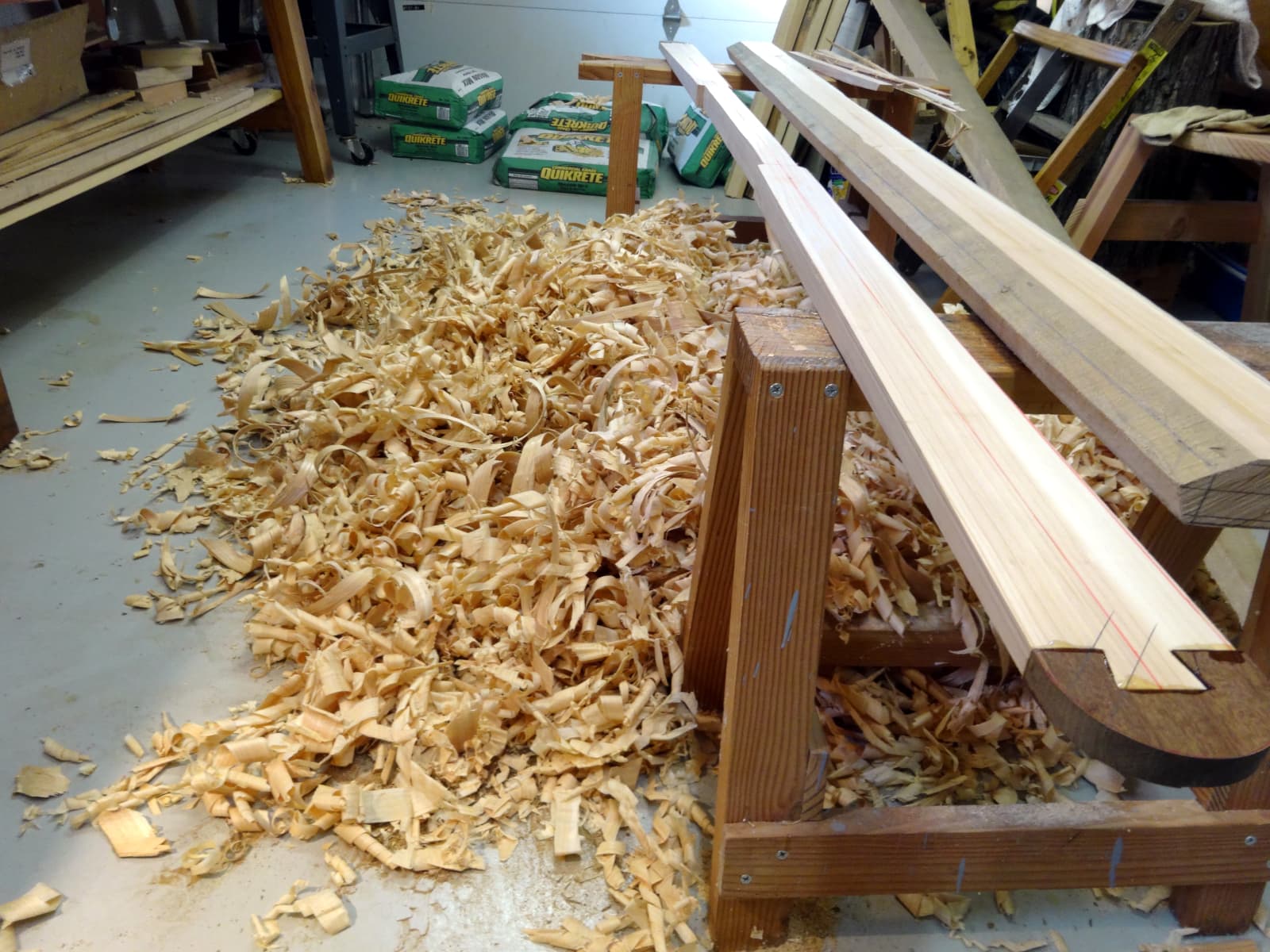
Next: attach the tips with high grade epoxy. And while the epoxy sets, clean the shop. Two partial paddles sit on the horses (one is a shorter “storm paddle”) while all the stuff that’s not paddle litters the floor. My habit is to let epoxy cure 20-24 hours no matter what it says on the container. Then, test by rough shaping with sharp tools. Knowing the tips won’t break off, I’ll get to the finish shaping the rest of the paddle shortly.

  • photo of pig pile of shavings and 2 partially done paddles
  • photo of tip - cured and rough shaped

Filed Under: Boating, kerfing plane, resawing, Woodworking

  • « Go to Previous Page
  • Page 1
  • Page 2
  • Page 3
  • Go to Next Page »

Primary Sidebar

Footer

Recent Posts

  • New Frame Saw / Scroll Saw
  • Lamppost Sign
  • Goodbye PayPal – Goodbye Bob’s eBooks
  • Anarchist’s Workbench is Done
  • Why we keep offcuts…

Categories

  • About
  • Artwork
  • Boatbuilding
  • Boating
  • bowl carving
  • Boxmaking
  • Clocks
  • Drawings
  • eBook
  • etude
  • Eva Too
  • Eva Won
  • Fiddlehead
  • Fiddlehead model
  • Flying
  • frame saw
  • gilding
  • green woodworking
  • Grinling Gibbons
  • Guns
  • Hand tools
  • Humor
  • kerfing plane
  • Lettercarving
  • Mill Creek 13
  • Model building
  • Power tools
  • Rant
  • resawing
  • scroll saw
  • Shopmade
  • sign painting
  • Stonework
  • Swimming
  • Technology
  • The Wall
  • treadle lathe
  • Uncategorized
  • VSD
  • Woodcarving
  • Woodturning
  • Woodworking
  • workbench

Other stuff

  • About
  • Contact
  • Privacy Policy

Copyright ©2024 · Bob Easton · All Rights Reserved