• Skip to primary navigation
  • Skip to main content
  • Skip to primary sidebar
  • Skip to footer

Bob Easton

Chocolate powered woodworking

  • Home
  • Grinling Gibbons Tour

Another Way to Get Out Parts

September 7, 2008 by Bob Easton 1 Comment

There are two watertight bulkheads in the Fiddlehead. The plans want them laminated from thin cedar boards. Why laminated? Laminating cedar with the grain of each lamination running in different directions keeps the incredible light weight while adding strength. Yes, they could be made from half inch plywood, but would be much heavier.

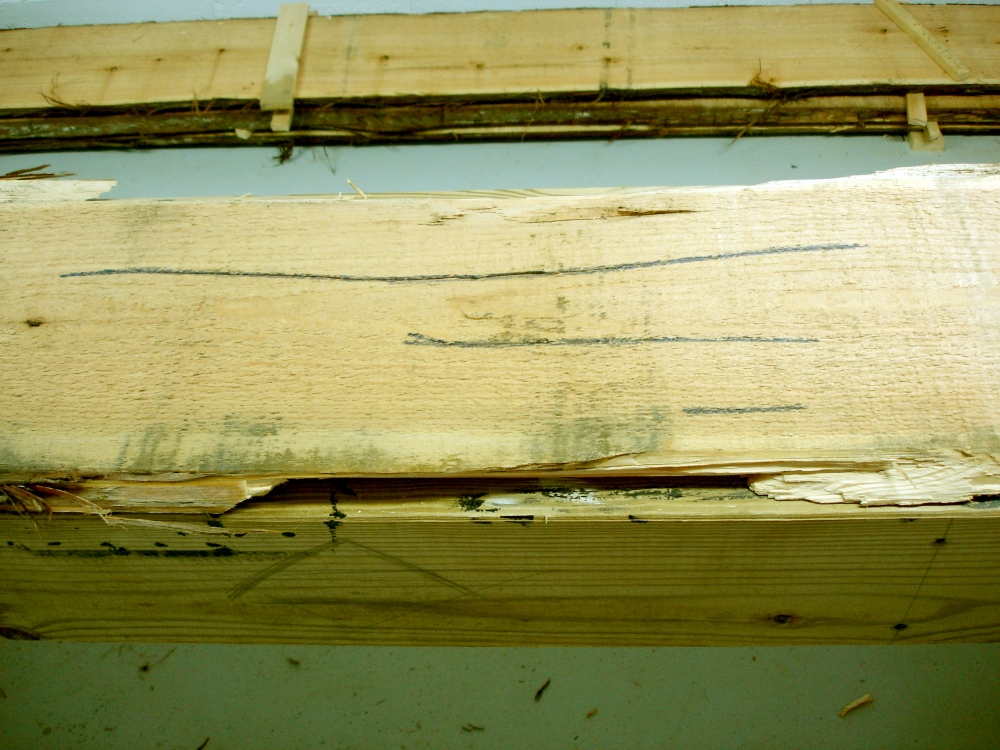
Building a model exposed the details that were very helpful when buying wood. damaged cedar lumberWilliam, the very helpful guy at M.L. Condon Lumber, was a bit surprised when I said “OK” to a board that had some very obvious cracks, and really nasty edge damage, in the middle of its length. He knew I was building boat and probably assumed I wanted only good long boards. I knew that board would be just fine for getting out the bulkhead parts. William saw it as damaged goods and discounted its footage appropriately. He got rid of a “reject” board and I got bulkhead parts at a bargain price.
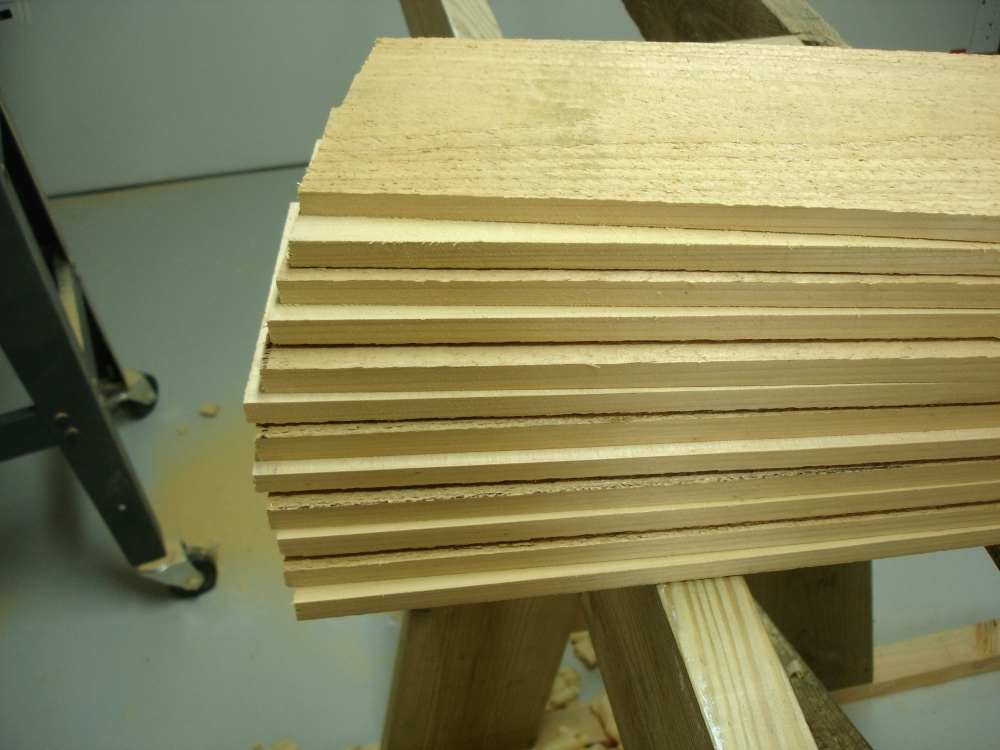
Getting them out of the wood requires thickness reduction, like the frame parts described earlier, but done differently this time. Instead of planing off excess wood as waste, I resawed these parts. Resawing is cutting the wood into thin layers. I don’t have a nifty frame saw for resawing like the one used by one of Dan’s friends, (need to make one of those) so I used my bandsaw.

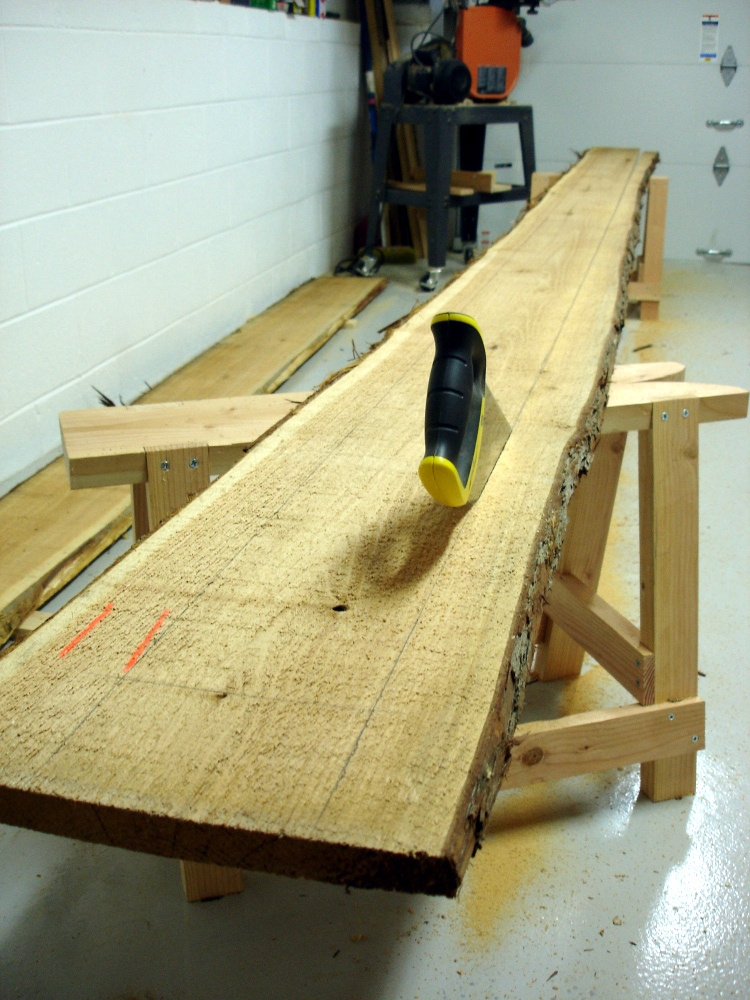
My bandsaw can be opened up to handle 6 inch material, plenty wide enough for the bulkhead parts. Rough cut some slabs out of that cedar board. There was enought wood beyond the damaged area to get the four slabs I wanted.  Joint an edge on each so they will run though the saw. Slice them in half.
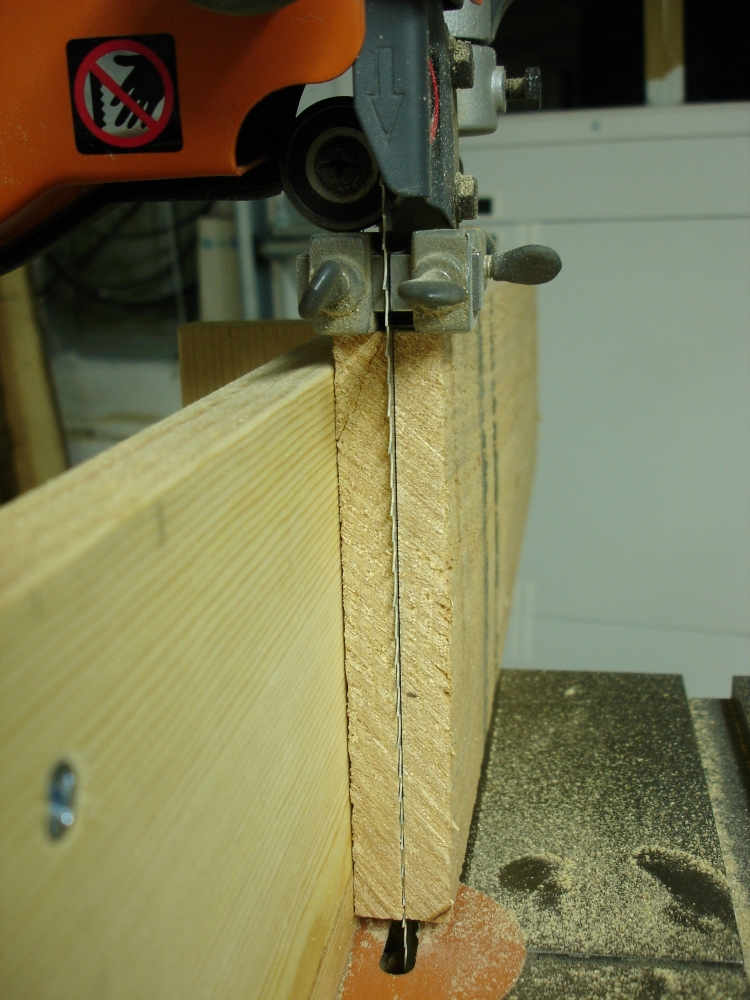
resawingresawn stock for bulkheadsI’ve used the band saw a couple of years with the original blade. A trial at resawing with that blade produced some very rough results, completely unsatisfactory. The answer was a Wood Slicer resaw blade, available from Highland Woodworking. Wow, what a differnce! The effort to push the wood through the saw is only about 1/3 of the original blade. The noise level dropped by more than half; no more squealing. The resulting cut leaves two very smooth surfaces. These need very little smoothing. They are now cut to half the original lumber thickness, a good bit thickner than needed. I’ll deal with that after laminating.
Filed Under: Boatbuilding, Eva Won, Fiddlehead, Woodworking

Aerobic

September 2, 2008 by Bob Easton 4 Comments


Filed Under: Boatbuilding, Eva Won, Fiddlehead, Hand tools

A New Plane

August 30, 2008 by Bob Easton Leave a Comment

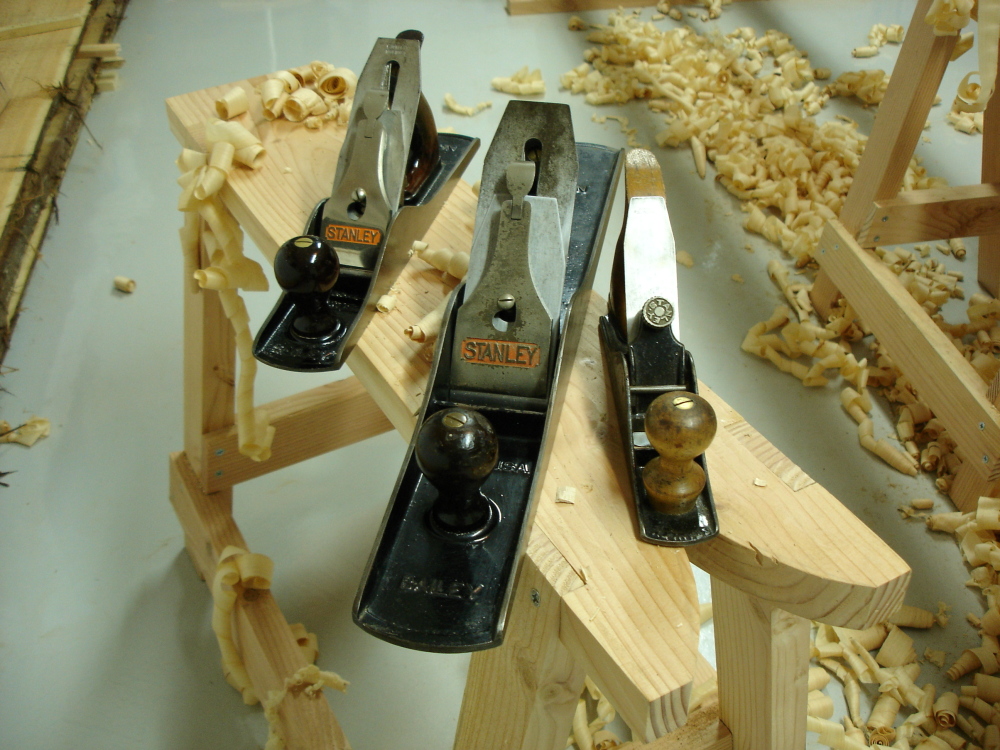
“Jointing” is preparing a flat surface over a long area, usually in preparation for joining two boards together.Stanley number 7 jointer plane The Stanley number 7 “jointer” plane has a very long body and nearly 8 pounds of heft. Here again, there are electric tools for such work. As with planers, they embody rapidly rotating knives that pulverize wood into very fine dust. My “new” Stanley number 7, makes long thin shavings instead. It’s length is key to how it works. It is shown here with two other planes to give a size comparison. Left to right, the planes are: number 5 jack plane, number 7 jointer plane, and number 40 scrub plane.

This one came from Jon Zimmer, a tool trader in Portland Oregon. Jon is one of the few who specialize in old tools and has a grading system that identifies the quality of the tools he sells. He is accurate, easy to deal with and has a great reputation. His tools are exactly as he describes them. A few other folks who also have great reputations are Patrick Leach, Sandy Moss, and Bob Kaune. All of these people know the tools, have accurate grading systems and can be trusted. While one might find occasional lower prices on eBay, the quality there varies and many of the people selling old tools are not experts like the folks just mentioned. On eBay “buyer beware.”

This plane dates to between 1933 and 1941. It has seen a lot of good use, but no visible abuse. It did have a goodly collection of wood dust in the corners and crevices. Basic cleaning took about an hour. Another hour of sharpening brought the iron to perfection.

My use for this plane is for jointing edges. It’s a really good thing to have certain parts of a boat fit together very well. For example, the bottom of the Fiddlehead is three long boards joined edge to edge. All that holds them together is glue … and a good fit. There are no other fasteners holding those boards together.

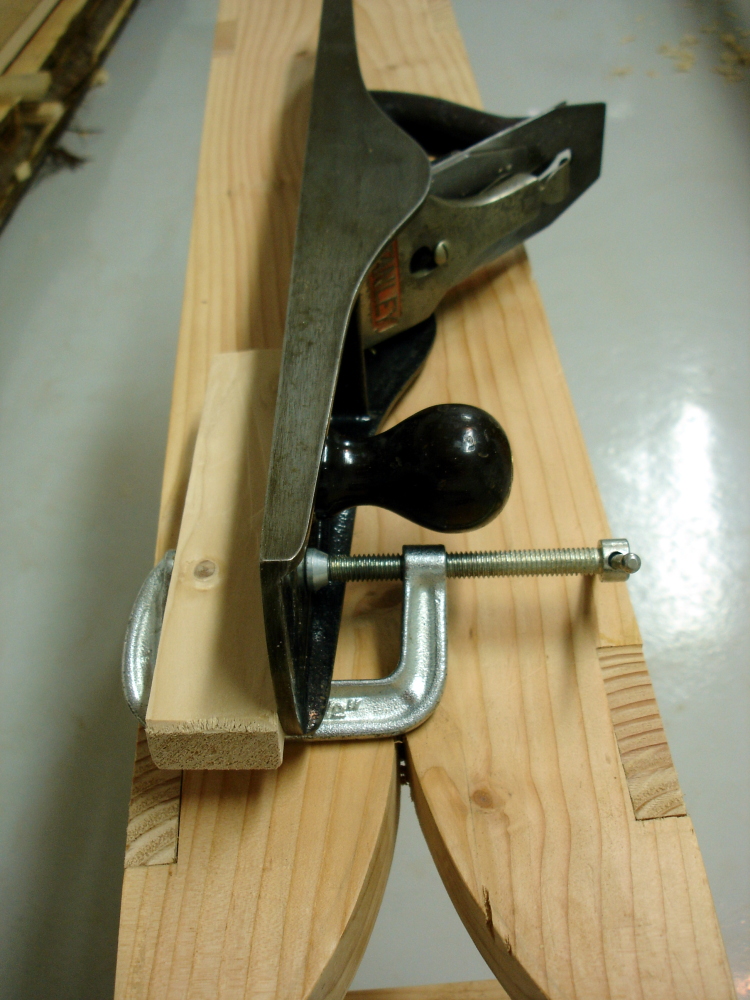
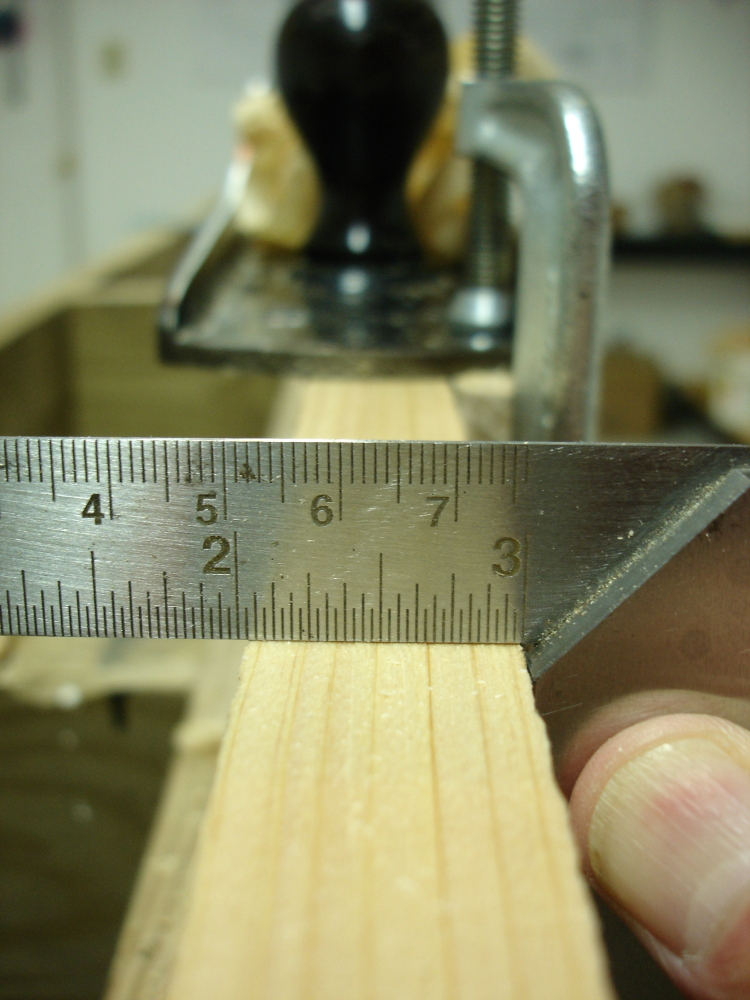
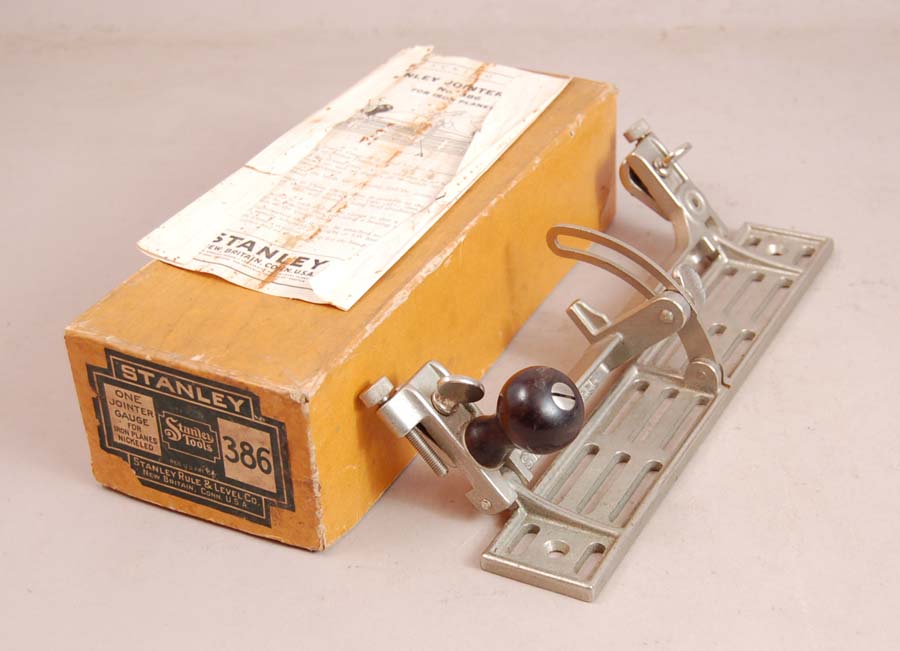
clamp a block to the planemake square edgesOf course, making square edges is usually desireable. So, how does one do that when running a hand plane along the edge of a board? With a fence. And there are fences for these planes, but they are rare and expensive.  I have devised an alternative, based on a method we used at the Wooden Boat School.  Clamp a block of wood (squared of course) to the nose of the plane and use it as a fence. Steady as you go and it works very well.

Filed Under: Hand tools, Woodworking

  • « Go to Previous Page
  • Page 1
  • Interim pages omitted …
  • Page 105
  • Page 106
  • Page 107
  • Page 108
  • Page 109
  • Interim pages omitted …
  • Page 129
  • Go to Next Page »

Primary Sidebar

Footer

Recent Posts

  • Sign Your Work!
  • New Frame Saw / Scroll Saw
  • Lamppost Sign
  • Goodbye PayPal – Goodbye Bob’s eBooks
  • Anarchist’s Workbench is Done

Categories

  • About
  • Artwork
  • Boatbuilding
  • Boating
  • bowl carving
  • Boxmaking
  • Clocks
  • Drawings
  • eBook
  • etude
  • Eva Too
  • Eva Won
  • Fiddlehead
  • Fiddlehead model
  • Flying
  • frame saw
  • gilding
  • green woodworking
  • Grinling Gibbons
  • Guns
  • Hand tools
  • Humor
  • kerfing plane
  • Lettercarving
  • Mill Creek 13
  • Model building
  • Power tools
  • Rant
  • resawing
  • scroll saw
  • Shopmade
  • sign painting
  • Stonework
  • Swimming
  • Technology
  • The Wall
  • treadle lathe
  • Uncategorized
  • VSD
  • Woodcarving
  • Woodturning
  • Woodworking
  • workbench

Other stuff

  • About
  • Contact
  • Privacy Policy

Copyright ©2024 · Bob Easton · All Rights Reserved