• Skip to primary navigation
  • Skip to main content
  • Skip to primary sidebar
  • Skip to footer

Bob Easton

Chocolate powered woodworking

  • Home
  • Grinling Gibbons Tour

Deck Framing and Hatches

May 14, 2009 by Bob Easton 2 Comments

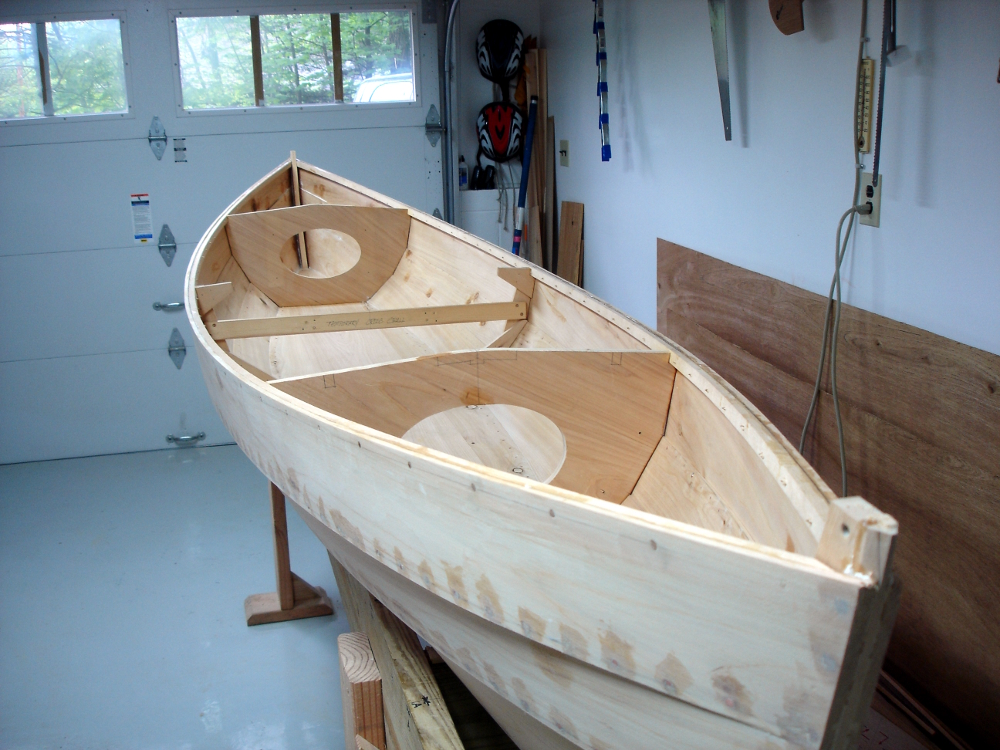
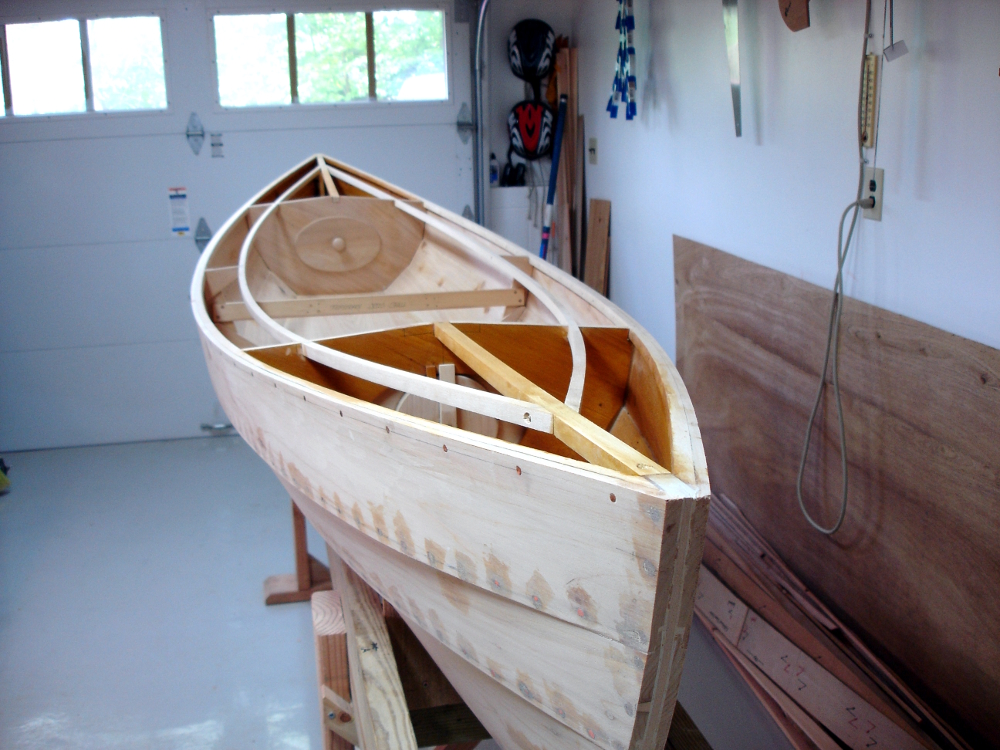
carlinsThe first round of deck framing consists of several carlins made of 5/8″ by 3/4″ spruce. These will support covering boards along the outside edges of the boat. A  little fussy fitting, some careful positioning through the bulkheads, screws set at angles to avoid collisions, a little epoxy and it’s easily done.

Those areas at the ends of the boats become watertight flotation compartments. They are going to get closed up soon. So, while I can still get a brush in there, they’re getting painted with a couple of coats of Cetol.
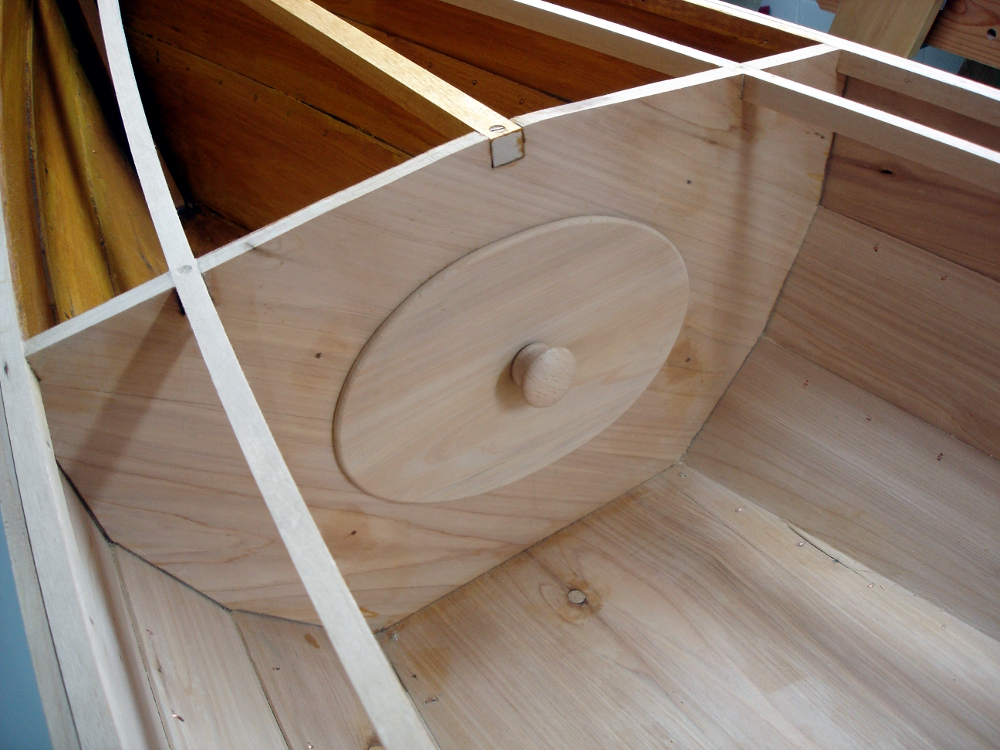
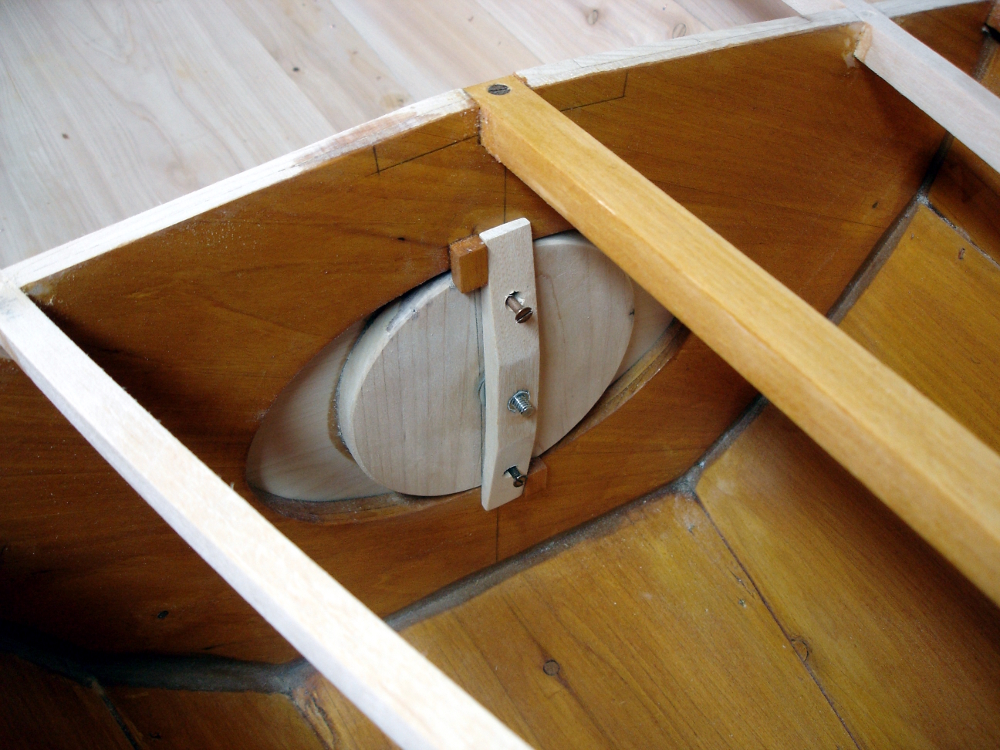
hatch-facehatch backsideOne of the fussier parts of the construction are the oval hatch covers for the watertight compartments. One could handily purchase round, plastic, readily available, easily installed covers, but that would be far too easy. Instead, I followed Harry’s drawings for a semi-diabolical device that ends up looking a lot nicer than a round slab-o-plastic. All is in place except the gasket which the last part of the hatches.

In case you’re wondering how it operates, the small knob is free to turn and is used to pull the bar toward the knob. The bronze screws are not tightened down all the way because they allow the bar to move in and out as needed. Two small wood stops help with positioning. Insert the cover so the bar fits through the opening. Turn the whole cover clockwise until the bar registers against the stops. Then tighten the knob until the gasket seals the opening.

Filed Under: Boatbuilding, Eva Won, Fiddlehead

Safety Week 2009 – for Handtool Woodworkers

May 7, 2009 by Bob Easton 3 Comments

safetyweek 2009Warning: Unlike most others, there’s no blood involved in this safety tip.

Executive Summary: When the going gets tough, STOP. There’s something wrong with:

  • The tool you are using
  • The way you are using it
  • Your frame of mind.

Many of the safety tips we are seeing this week relate real life experiences. Here’s my confession. Back when I was learning how to effectively resaw long lumber with handtools, I did one trial cut using a simple, but sharp, Disston rip saw. I knew that the workholding setup was less than optimal and that I would need something better. I knew that this wasn’t the tool I ultimately wanted to use but had not yet built the much better frame saw. When the sawing got tougher than it should have been, I knew that I should stop and give up the test. Instead, I just ploughed on through, eager to see what that piece of wood looked like when sliced in that manner.

One of the oddities of rotator cuff injuries is that they don’t manifest immediately. They become apparent only when the injury, in this case a torn tendon under the anterior deltoid, is asked to do something that irritates the injury, such as reaching up to get something from a high shelf. It’s the coming down that goes “Zowie!” These sorts of injuries take months to heal, and this one is no exception. One can’t simply stop using a shoulder and wait. So, I’ve included some extra therapy to build muscle strength in the deltoids, and have continued on with life as usual, despite the rather frequent “Zowies!” After all, there’s a boat to be built!

Bottom line: When your sawing, or planing, or other handtool activity becomes difficult, STOP. Check your tools for sharpness. Optimize workholding. Diagnose why unusual force may be needed. Maybe all you need is a mental break and a fresh approach. Don’t just muscle your way through it. You could bear the consequences for months.

By the way, a comment about aging. I’ll become 65 this year. I’ve already noticed that nature starts taking things away from you as you age. Regular weight training is part of the way I fight that off, as is plenty of handtool work in my boatbuilding shop. Stretching and staying flexible is also part of that regimen. A few days ago I saw an entry on one of the woodworking forums where a guy said he wasn’t going to put a leg vise on his workbench because he doesn’t like bending down to adjust the vice. Making an assumption that he’s in his mid-life years, I’ve got news for him and others who think this way: Get use to bending and staying flexible, or by the time you retire and have more time for your hobby your body won’t be able to do it.

Filed Under: Hand tools, Woodworking

Turned Over

May 5, 2009 by Bob Easton Leave a Comment

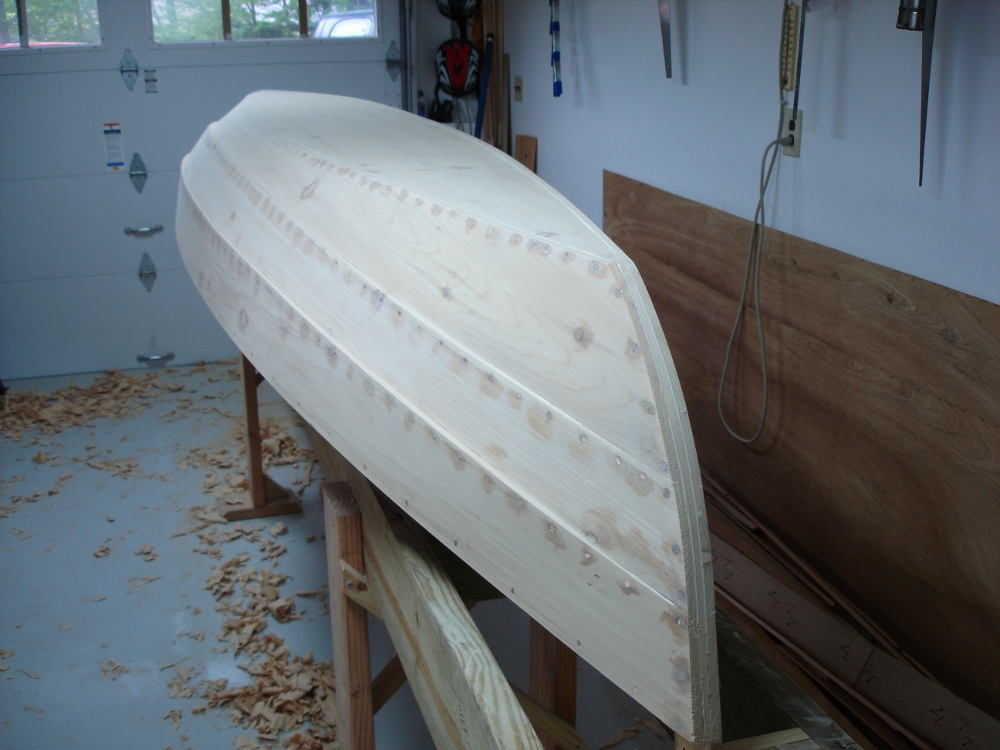
hull doneturned overThe hull is done. Dings removed, holes and fasteners faired, rough sanded. Turning over is usually a major milestone, sometimes indicating a halfway point. This boat is probably less than half done. There’s a lot of fussy fitting ahead.

Filed Under: Boatbuilding, Eva Won, Fiddlehead

  • « Go to Previous Page
  • Page 1
  • Interim pages omitted …
  • Page 92
  • Page 93
  • Page 94
  • Page 95
  • Page 96
  • Interim pages omitted …
  • Page 129
  • Go to Next Page »

Primary Sidebar

Footer

Recent Posts

  • Sign Your Work!
  • New Frame Saw / Scroll Saw
  • Lamppost Sign
  • Goodbye PayPal – Goodbye Bob’s eBooks
  • Anarchist’s Workbench is Done

Categories

  • About
  • Artwork
  • Boatbuilding
  • Boating
  • bowl carving
  • Boxmaking
  • Clocks
  • Drawings
  • eBook
  • etude
  • Eva Too
  • Eva Won
  • Fiddlehead
  • Fiddlehead model
  • Flying
  • frame saw
  • gilding
  • green woodworking
  • Grinling Gibbons
  • Guns
  • Hand tools
  • Humor
  • kerfing plane
  • Lettercarving
  • Mill Creek 13
  • Model building
  • Power tools
  • Rant
  • resawing
  • scroll saw
  • Shopmade
  • sign painting
  • Stonework
  • Swimming
  • Technology
  • The Wall
  • treadle lathe
  • Uncategorized
  • VSD
  • Woodcarving
  • Woodturning
  • Woodworking
  • workbench

Other stuff

  • About
  • Contact
  • Privacy Policy

Copyright ©2024 · Bob Easton · All Rights Reserved